
Brokerage
Full-Service vs Discount Brokerage in Pakistan
By Muhammad Abbas · · 7 min read
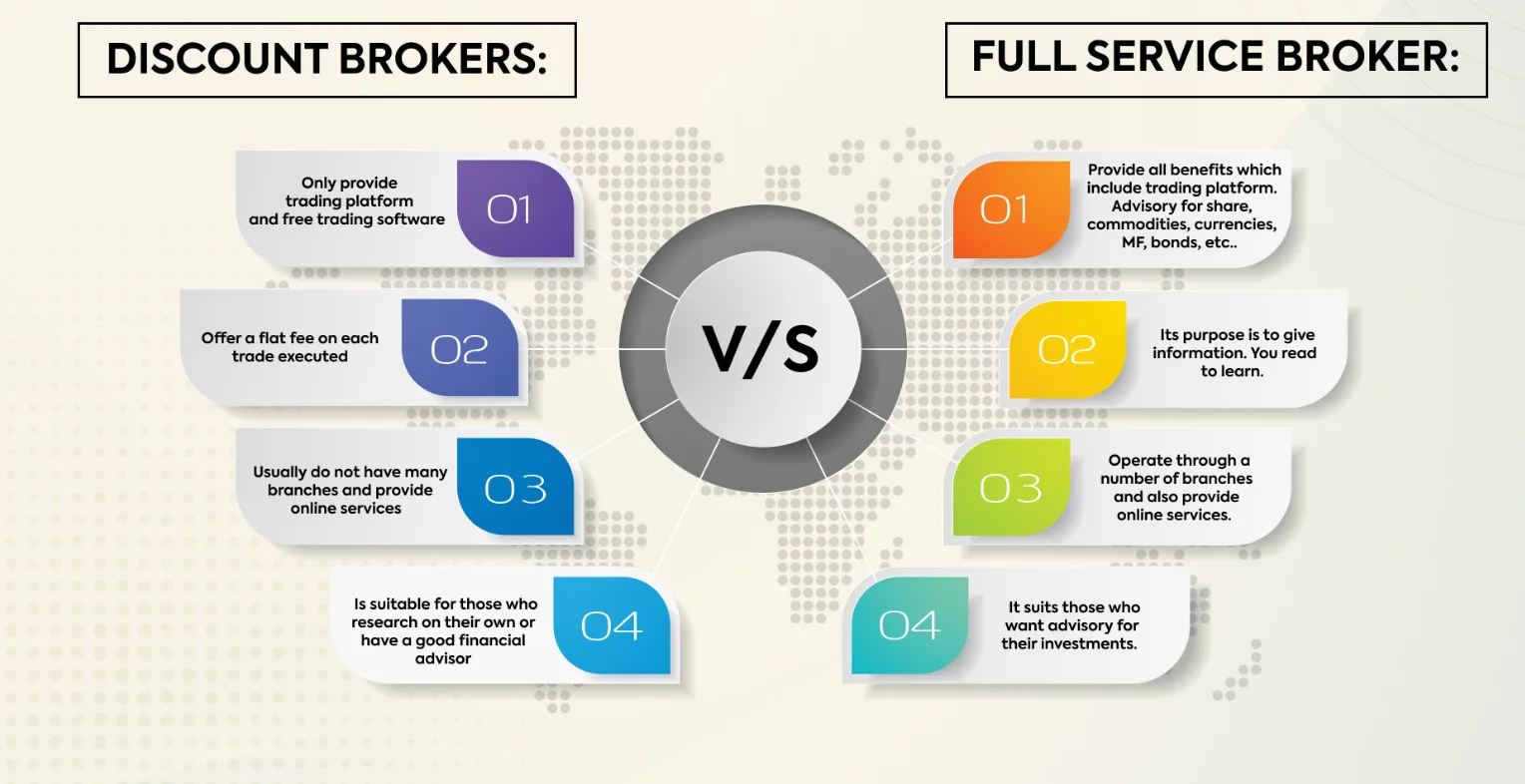
Most investors in Pakistan think this choice is only about brokerage charges. It is not. Brokerage charges matter, but the real difference is simpler and more uncomfortable: how much decision-making support is available when the market turns against you.
In a calm market, almost any setup “works.” In a volatile market, the wrong brokerage model exposes bad habits that investors usually do not notice in themselves. Panic selling, chasing momentum, overtrading, holding losers too long, buying because “everyone is buying,” or assuming a tip counts as analysis. That is why this comparison needs to be practical rather than theoretical.
This guide explains what full-service and discount brokerage typically mean in Pakistan, what each model actually delivers, and how to choose based on behaviour, not marketing.
What a Full-Service Brokerage Means
A full-service brokerage is a brokerage relationship with people attached to it. Not just a trading account, but access to a dealing desk, a relationship manager in many cases, and research that is presented as a point of view rather than raw numbers.
In Pakistan, full-service brokers often position themselves as “advisory-led.” That does not automatically mean personalised wealth management. It usually means the client can speak to someone, receive market updates, get research notes, discuss specific PSX names, and ask the obvious questions that investors hesitate to ask when they are alone on a trading app.
Full-service brokerage also includes more hand-holding throughout the process. Portfolio reviews, allocation discussions, risk conversations, and suggestions that are not limited to “buy this stock today.” The good ones slow clients down when they are about to do something emotional. The bad ones push activity because activity earns commission. That difference matters, and it is one of the first things investors should evaluate.
What a Discount Brokerage Means
A discount brokerage is built for execution. It gives a platform, an account, and the ability to place orders with minimal friction. Costs are lower because the service is narrower.
In Pakistan, discount models often show up as online-first trading with limited relationship management. Some offer basic market commentary. Some offer almost none. The assumption is that the investor already knows what to do, or at least wants to make the decision independently.
Discount brokerage works well when the investor has a plan, can handle volatility, and does not require reassurance every time the KSE-100 moves sharply. It becomes dangerous when “independence” is actually “guessing alone.”
The Real Difference: Support vs Self-Reliance
Here is the honest way to frame it. Full-service brokerage is a support model. Discount brokerage is a self-reliant model.
With full-service, the investor pays more because the broker provides time, interpretation, and access to people expected to follow markets closely. With a discount, the investor pays less, as the broker is mainly providing infrastructure.
This matters in Pakistan because local investing is not just about company fundamentals. It is also about rates, liquidity, policy signals, currency pressure, and sentiment. When macro headlines drive the market, many retail investors make moves that seem rational in the moment but look careless in hindsight.
Support does not guarantee success, but it often prevents avoidable mistakes.
Costs: What Is Actually Included
In Pakistan, cost differences typically show up as higher brokerage rates and, sometimes, additional advisory charges in a full-service relationship. Discount brokers keep brokerage fees lower, and investors are expected to handle research and decision-making independently.
The mistake is assuming lower brokerage automatically means better outcomes. If the cheaper model leads to more impulsive trading, more churn, and more “in and out” decisions, the lower commission bill can quietly turn into a much larger performance cost.
A helpful question is simple: if a market correction hits, will the investor want to talk to someone, or prefer full control without discussion? Many people choose a discount, then behave as if they needed full-service.
Research Quality: Reports vs Noise
Full-service brokerages in Pakistan usually provide research notes, earnings previews, sector updates, and sometimes model portfolios. The quality varies massively by firm. Some research is genuinely analytical. Some research is marketing dressed as analysis.
Discount brokerages typically do not provide structured research that can guide decisions. Investors rely on public news, social media, YouTube commentary, Telegram groups, and market rumours. That is not “research.” It is exposure to narratives.
This is the key issue. Investors do not need more information. Investors need filtering, interpretation, and context. That is what good research is supposed to do.
If research is a deciding factor, the better question is not “Does the broker provide research?” It is “Does the research help make fewer bad decisions?”
Behaviour During Volatility: The Part Nobody Plans For
The strongest argument for full-service brokerage is not stock picking. It is behaviour management.
Many investors in Pakistan are long-term investors in theory and short-term traders in practice. When markets rally, confidence goes up. When markets correct, discipline collapses. That is where a relationship-based model can help, because a decent advisor will ask the questions an investor avoids. Why was this position bought? What was the plan? What changes now? Is the sell decision based on risk or fear?
Discount brokerage offers no friction. That can be an advantage for disciplined investors. It can also be a trap for reactive investors. Easy execution does not improve decision quality. It just makes decisions faster.
Who Should Choose Full-Service Brokerage in Pakistan
Full-service tends to suit investors who are still building their investment process, who prefer discussion before acting, and who do not want to spend time filtering noise from signal.
It also suits professionals who have money to invest but limited time to track markets daily. A busy investor usually does not need constant tips. A busy investor needs a strategy, periodic reviews, and guidance that reduces emotional decision-making.
Full-service is also often the better fit for investors who want to discuss diversification across PSX equities, mutual funds, and fixed income products rather than treating everything as a stock trade.
Who Should Choose Discount Brokerage in Pakistan
Discount fits investors who already have a clear strategy, are comfortable executing without reassurance, and can tolerate volatility without reacting to headlines.
It also fits active traders who prioritise lower transaction costs and faster execution, provided they have a risk system. Without a risk management system, low-cost execution can encourage overtrading, which is one of the most common reasons retail investors underperform.
Discount brokerage is not “beginner-friendly” simply because it is cheaper. For many beginners, it is psychologically challenging because it places full responsibility before they have developed discipline.
Questions That Expose the Right Choice Quickly
If the answer to most of these is “yes,” full-service is usually a better fit in Pakistan’s market environment:
- Is there a preference for speaking to someone before making a large decision?
- Is there discomfort with sharp drawdowns?
- Is stock selection usually influenced by social media or friends?
- Is there uncertainty about how to size positions or when to exit?
If the answer is “no,” and the investor already invests with a plan, discount brokerage can work well and keep costs down.
This is not about intelligence. It is about temperament.
Common Mistakes Investors Make When Choosing a Brokerage Model
The most common mistake is choosing a discount brokerage because it feels modern and cost-effective, only to end up behaving like a full-service client. Constantly seeking tips from informal sources while executing independently is one of the fastest ways to lose money.
Another mistake is choosing a full-service brokerage and assuming the advisor will “take care of everything.” No advisor can replace investor responsibility. The investor still needs to understand the plan, the risk, and the reason behind each decision.
The healthiest advisory relationships in Pakistan are those in which the investor stays involved, asks questions, and expects explanations that make sense.
Closing Thought
The full-service vs discount decision in Pakistan is not a status choice. It is a behavioural choice.
If the investing approach depends heavily on reassurance, filtering, and structured guidance, full-service is often worth the cost. If the approach is genuinely self-directed and disciplined, discount brokerage can be efficient and economical.
The wrong choice is picking a model that does not match real behaviour once the market gets uncomfortable.
Frequently Asked Questions
What is the main difference between full-service and discount brokerage in Pakistan?
Full-service brokerage usually includes human support, research, advisory-style guidance, and trade execution. Discount brokerage mainly provides a platform for execution at a lower cost, with limited or no personalised advisory support.
Is discount brokerage always better because it is cheaper?
Not always. Lower brokerage charges help only when decision-making remains disciplined. If a lower-cost setup leads to impulsive trades, chasing tips, or overtrading, overall outcomes can worsen even though transaction fees are lower.
Can beginners use discount brokerage in Pakistan?
They can, but it is risky without a strategy and a risk framework in place. Beginners often benefit from structured guidance, especially in volatile markets where emotions drive decisions.
Do full-service brokers in Pakistan guarantee returns?
No. Any promise of guaranteed returns should be treated as a red flag. A professional advisory relationship should focus on suitability, risk management, and disciplined decision-making.
How should a broker be evaluated, regardless of model?
The key checks are licensing and credibility, transparency in charges, quality of communication, and whether explanations are clear. A broker should not pressure unnecessary trading, and advice should make sense beyond short-term market noise.

Written by
Muhammad Abbas
CEO, Bhayani Securities (Pvt) Ltd.
Need Guidance?
Book a free consultation with our licensed investment advisors.