
Brokerage
How to Build a Disciplined Trading Routine
By Muhammad Abbas · · Updated · 3 min read
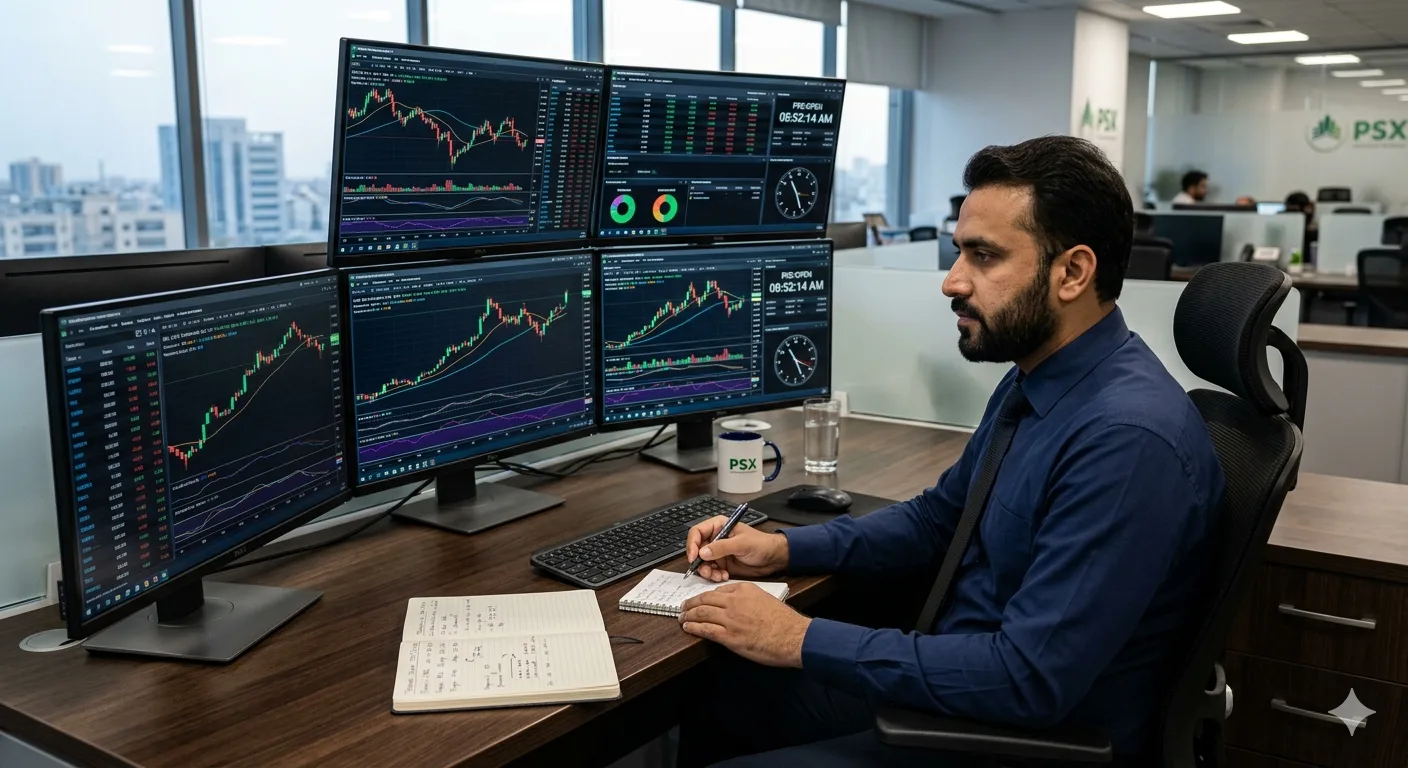
The difference between a professional trader and a speculator is not the size of their account, but the consistency of their process. Most retail investors react to news as it flashes on their screens; a professional at Bhayani Securities (Pvt) Ltd. executes a plan finalized before the market even opens.
With the implementation of the T+1 Settlement Cycle and the recent 2026 digital disclosure mandates, the market moves faster than ever. A disciplined routine removes the “human element” of fear and greed, replacing it with a repeatable, systematic workflow.
Phase 1: Pre-Market Preparation (08:00 AM – 09:17 AM)
Your success is determined before the Market Open bell. If you are figuring out what to buy at 9:30 AM, you have already ceded your edge to institutional players.
1. The PUCARS Material Information Audit
The first step in any professional routine is to audit the Pakistan Unified Corporate Action Reporting System (PUCARS). As of February 2026, all material disclosures are exclusively digital. You must check for:
- Earnings Releases: Specifically looking for EPS and Dividend declarations that deviate from analyst expectations.
- Director Notices: Any buying or selling by company insiders, which often signals high-conviction moves.
- Regulatory Notices: SECP or PSX updates that could impact sector-wide liquidity.
2. Identifying ‘Triggers’ on the Watchlist
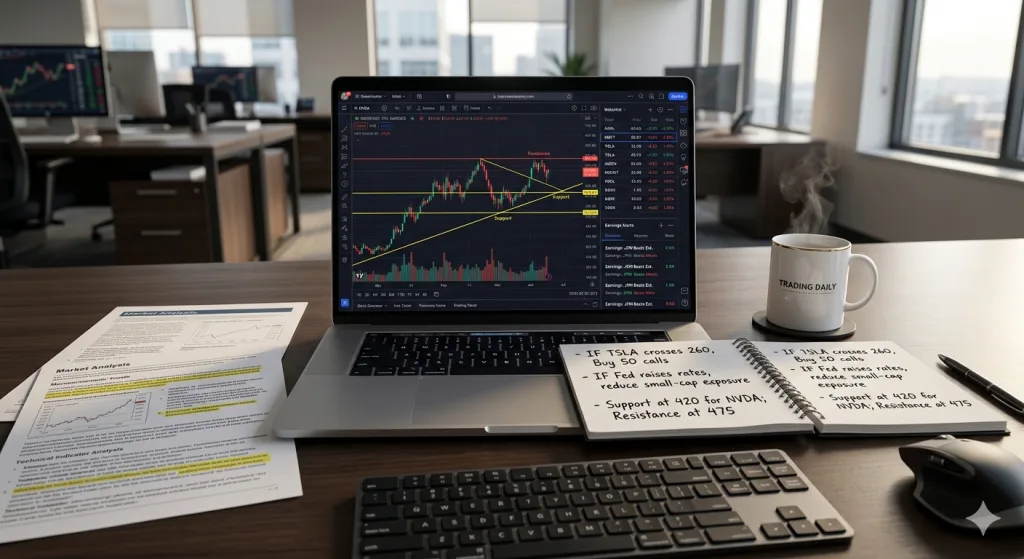
Do not try to track the entire KSE-100. Focus on a high-conviction watchlist of 5–7 stocks. Using your technical analysis skills, identify specific “If-Then” scenarios:
- “If LUCK breaks its resistance level on high volume, then I will enter a position.”
- “If HUBC drops to its support level, I will wait for a candlestick reversal before buying.”
Phase 2: Market Hours Execution (The ‘Sniper’ Phase)
During market hours, your only job is to be a “Sniper,” waiting for your pre-defined triggers to be hit.
1. Navigating the Pre-Open Session (09:00 AM – 09:15 AM)
The Pre-Open session is for observing the Bid/Ask balance in the order book. Avoid placing orders in the first 15 minutes of the Regular Market (09:17 AM). Let the “opening gap” settle. Amateurs trade the open; professionals trade the trend that emerges after the first hour.
2. Ramadan 2026 Trading Timing Adjustments
During Ramadan 2026, market hours are shortened. As of March 2026, the market typically closes at 1:00 PM (Mon-Thu) and 11:30 AM (Fri). This shorter window means liquidity is more concentrated. A disciplined routine requires you to finalize your high-conviction trades early, avoiding the “Closing Auction” volatility, where spread widening is common.
Phase 3: The T+1 Settlement & Cash Discipline
The transition to T+1 Settlement on 9 February 2026 has made cash management a daily requirement.
The ‘Settlement Check’ (12:00 PM)
Before the market closes, perform a “Cash Audit,” as under T+1, any shares you buy today must settle by the next morning. A disciplined routine ensures that you are not over-leveraged. If you are relying on a sale to fund a purchase, ensure the “Sale Settlement” aligns with the “Purchase Obligation” to avoid margin calls in your Standard Trading Account.
Phase 4: Post-Market Analysis (The ‘Debrief’ Phase)
Real growth happens after the market closes. Without reflection, experience is just a series of random events.
1. The Execution Quality Audit
Review every trade you made today. Do not focus on whether you made money (P&L); focus on execution quality:
- Did I enter at my pre-defined trigger price?
- Did I respect my stop-loss strategy?
- Did I let my profits run to the target, or did I exit early due to fear?
2. Updating the Trading Journal
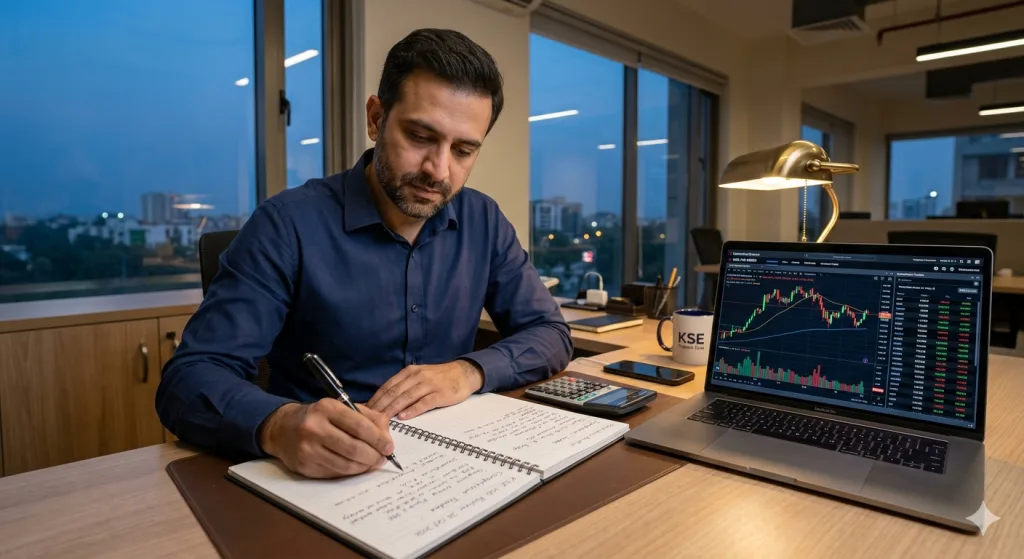
A trading journal is the only way to identify your behavioural biases. Record the context of your trades. In 2026, tracking how you reacted to specific news triggers, like an SBP policy rate announcement, will help you refine your routine for the next cycle.
Frequently Asked Questions
1. How do I manage a trading routine if I have a full-time 9-to-5 job?
For the working professional, the routine shifts to the pre-market and post-market hours. Use limit orders and automated stop-losses during the morning session. A disciplined “Passive Routine” is significantly more profitable than “Reactive Trading” during office lunch breaks.
2. Why is the 9:00 AM – 09:15 AM ‘Pre-Open’ session so critical in 2026?
The Pre-Open session provides a “Price Discovery” window. In the T+1 era, news is priced in almost instantly. By watching the volume accumulation in the order book during this window, you can gauge the strength of the opening trend without risking your capital.
3. What is the most common reason a disciplined routine fails?
“Complexity Overload.” Many investors try to track too many indicators or too many stocks. A professional routine should be simple enough to complete your daily review and pre-market prep in 30 minutes. If your routine is too difficult, you will eventually abandon it during periods of market volatility.
4. How does the 2026 digital PUCARS mandate affect my morning prep?
Before 2026, many disclosures were delayed by manual filings. Today, information is disseminated in real time. Your routine must include checking the PSX Data Portal at exactly 08:30 AM to ensure you aren’t trading on outdated information.
5. How do I grade my performance if the market had a ‘Black Swan’ event?
You grade yourself on compliance, not profit. If the market dropped 5,000 points but you followed your risk management rules and exited at your stop-loss, you have had a successful day despite the loss. Capital preservation is the ultimate mark of discipline.

Written by
Muhammad Abbas
CEO, Bhayani Securities (Pvt) Ltd.
Need Guidance?
Book a free consultation with our licensed investment advisors.