
Brokerage
Active vs Passive Investing in Pakistan | Which Strategy Suits You Best?
By Muhammad Abbas · · Updated · 12 min read

The Pakistan Stock Exchange has entered one of its most exciting phases in recent memory. The KSE-100 Index hit an all-time high of 191,032 points in January 2026 after rallying roughly 59,000 points through 2025 alone. New investor registrations continue to climb. Retail participation grows every quarter. Yet most people who open a trading account never pause to ask themselves the one question that matters more than any stock pick.
That question is not “what should I buy?” It is “How should I invest?”
The answer usually falls into one of two categories. Active investing and passive investing. These two philosophies shape everything from how often you trade, how much you pay in fees, how much time you spend monitoring the market, and ultimately how your portfolio performs over the long run.
This guide breaks down both strategies in the context of the Pakistani market so you can make a decision that aligns with your financial goals, risk appetite, and available time.
What Is Active Investing?
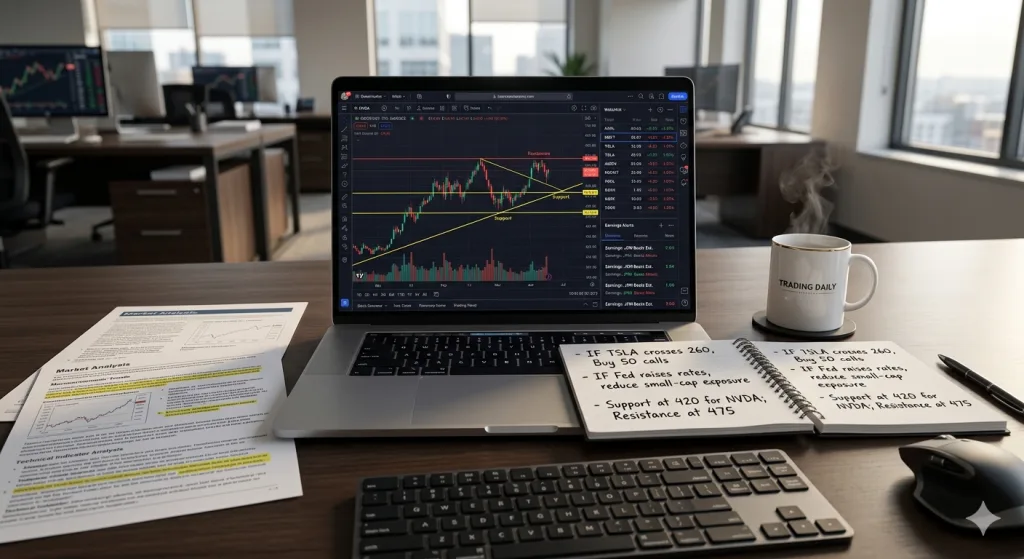
Active investing means you (or your broker or portfolio adviser) make deliberate decisions about what to buy, when to buy it, and when to sell it. The goal is to beat the market. You study company financials, track sector trends, follow SBP monetary policy decisions, and act quickly when opportunities appear.
In Pakistan, most retail PSX traders follow an active approach, whether they realise it or not. If you check stock prices every morning, read research reports before placing an order, or adjust your portfolio based on earnings season results, you are an active investor.
Active investing demands regular market monitoring, strong analytical skills, and a willingness to act quickly. It also requires access to quality research and reliable execution tools. Without these, active trading often turns into guesswork.
How Active Investing Works on the PSX
Imagine you follow the cement sector closely. You notice that construction activity across Pakistan picks up ahead of the federal budget. You review quarterly earnings reports from companies like Lucky Cement and Maple Leaf Cement, study their price-to-earnings ratios, and identify one that looks undervalued relative to its peers. You place a buy order through your broker, hold the position for a few weeks, and sell once the price reaches your target.
That is active investing in action.
Brokerage firm in Pakistan like BSL play a central role in this process. BSL provides daily research reports, trading signals, and one-on-one advisory support that active investors rely on to make informed decisions. Through the KITS online trading platform, investors execute trades in real time without delays.
The typical tools active investors use on the PSX include tracking the KSE-100 and KSE-30 indices, sector rotation strategies (moving capital from one industry to another based on macroeconomic conditions), earnings-season analysis, and technical chart patterns. Active investors also closely monitor State Bank of Pakistan interest rate decisions because monetary policy directly affects banking stocks, real estate, and consumer-facing companies.
What Is Passive Investing?
Passive investing takes a fundamentally different approach. Instead of trying to beat the market, passive investors aim to match market returns. They buy diversified instruments that track an index or a broad basket of stocks and hold them over the long term with minimal trading.
The logic behind passive investing is straightforward. Markets tend to rise over time. If you hold a diversified position long enough, your returns will reflect that growth without the stress, time, and cost of picking individual winners.
Passive investing requires far less day-to-day involvement. You do not need to read research reports every morning or react to every political headline. You review your portfolio periodically, perhaps once a quarter, and let compounding do the heavy lifting.
This approach remains relatively new and underutilised in Pakistan compared with developed markets such as the United States and the United Kingdom. However, interest is growing, especially among younger investors who have limited time to monitor the market daily.
Passive Investing Options Available in Pakistan
Pakistan’s passive investing landscape is still developing, but several credible options already exist for investors.
Exchange Traded Funds (ETFs) represent the most direct passive investing vehicle on the PSX. Pakistan entered the ETF space in March 2020 with the listing of the UBL Pakistan Enterprise ETF (UBLPETF) and the NIT Pakistan Gateway ETF (NITGETF). Later that year, Al Meezan Investment Management introduced the Meezan Pakistan ETF (MZNPETF), offering a Shariah-compliant option.
As of 2026, nine ETFs trade on the PSX, covering equity, debt, sector-specific, and Shariah-compliant strategies. Some of these delivered impressive returns through 2025. UBLPETF, NITGETF, and JSGBETF returned between 60% and 77%, outperforming the KSE-100 Index itself.
Mutual Funds offer another path. Pakistan has a well-established mutual fund industry regulated by the Securities and Exchange Commission of Pakistan (SECP) and tracked by the Mutual Funds Association of Pakistan (MUFAP).
Asset management companies such as Al Meezan Investment Management, NBP Fund Management, HBL Asset Management, and UBL Fund Managers offer a range of equity, income, money-market, and balanced funds. Many of these operate as actively managed funds, but index-tracking options such as the KSE Meezan Index Fund allow investors to follow a passive strategy.
National Savings Schemes serve as a loosely passive vehicle for extremely conservative investors. Products like Defence Savings Certificates and Behbood Savings Certificates offer fixed returns with government backing. While not technically market-linked, many Pakistani households treat them as their default “investment”, and they deserve mention as part of the broader passive landscape.

Key Differences Between Active and Passive Investing
Understanding the practical differences between these two strategies helps you decide which one fits your life, your goals, and your personality.
- Investment Goal. Active investors try to beat the market. They aim to generate returns higher than the KSE-100 benchmark through careful stock selection and market timing. Passive investors try to match the market. They accept average market returns in exchange for simplicity and consistency.
- Time Commitment. Active investing demands daily attention during trading hours (9:30 AM to 3:30 PM on the PSX). You need to track price movements, read research, and make trading decisions regularly. Passive investing requires a periodic review, perhaps once a month or once a quarter, to rebalance or check your portfolio allocation.
- Cost. Active trading generates higher costs. Every buy and sell order incurs brokerage commissions. Frequent trading also triggers Capital Gains Tax (CGT) more often. For securities acquired on or after 1 July 2024, individual tax-filer investors pay a flat 15% CGT on profits. These costs compound over time, eating into your net returns. Passive instruments like ETFs carry lower management fees compared to actively managed mutual funds, and because you trade less frequently, your overall transaction costs stay lower.
- Risk Level. Active investing carries higher short-term risk because it depends on individual stock selection and market timing. A single bad call can wipe out weeks of gains. Passive investing spreads risk across a diversified basket of securities, reducing the impact of any single stock’s poor performance. However, passive investors still face market-wide risk during downturns.
- Knowledge Required. Active investing demands deep market expertise. You need to understand financial statements, valuation metrics, technical analysis, and macroeconomic indicators. Passive investing requires basic financial literacy. You need to understand what an ETF or index fund does, how compounding works, and why diversification matters.
- Control. Active investors have full control over every position in their portfolio. They choose exactly which stocks to buy, how much to allocate to each, and when to exit. Passive investors delegate these decisions to a fund manager or an index methodology. You own a basket of securities chosen by someone else.
Pros and Cons of Active Investing in Pakistan
Let’s now explore the key advantages and disadvantages of active investing:
Advantages
- Potential for Higher Returns. Skilled active investors can significantly outperform the market. In a market like the PSX, where information asymmetry still exists and many stocks remain under-researched, active investors with strong analytical capabilities can identify mispriced opportunities that passive instruments miss entirely.
- Flexibility to Respond to Local Events. Pakistan’s market moves sharply in response to political developments, SBP rate decisions, IMF programme updates, and federal budget announcements. Active investors can position themselves ahead of these events or exit quickly when sentiment turns negative. Passive investors ride through the volatility whether they want to or not.
- Ability to Avoid Weak Sectors. When an entire sector faces structural headwinds, active investors simply avoid it. If textile stocks look unattractive due to rising energy costs, an active investor moves capital into banking or fertiliser instead. A passive ETF tracking the KSE-100 still holds those textile stocks because they are part of the index.
- Income Through Dividends. Active investors can specifically target high-dividend-yield stocks on the PSX. Companies in the banking, energy, and fertiliser sectors often pay attractive dividends. Building a dividend-focused portfolio is a strategy that passive index products do not specifically optimise for.
Disadvantages
- Higher Transaction Costs. Every trade generates brokerage commissions. Frequent buying and selling also mean more CGT events. Over a year, these costs add up significantly and reduce your net return.
- Emotional Decision-Making. The PSX can move sharply on rumours, political noise, and social media speculation. Active traders often make impulsive decisions during periods of fear or greed. Panic selling during a market dip and FOMO buying during a rally destroy more portfolios than any single bad stock pick.
- Time Demands. Active investing requires real commitment. If you have a full-time job, managing a portfolio of individual stocks alongside your career becomes exhausting. Missed opportunities and delayed reactions often cost more than the strategy gains.
- Most Active Traders Underperform. This is an uncomfortable truth globally, and Pakistan is no exception. The majority of retail traders who attempt to beat the market consistently fail to do so over the long term. Transaction costs, emotional mistakes, and information gaps all work against the average active trader.
Pros and Cons of Passive Investing in Pakistan
Here you’ll learn the key advantages and disadvantages of passive investing:
Advantages
- Lower Costs. ETFs and index funds charge lower management fees compared to actively managed mutual funds. Because you trade infrequently, your brokerage commissions and CGT liability stay minimal. Over a decade, the fee savings alone can make a meaningful difference to your total returns.
- Reduced Emotional Bias. When you commit to a passive strategy, you remove the temptation to react to every market headline. You do not chase hot tips. You do not panic sell during corrections. This discipline alone puts you ahead of most retail traders.
- Time Efficiency. Passive investing takes minutes per month rather than hours per day. If you have a demanding career, a family, or simply prefer not to stare at stock prices all day, passive investing lets your money work while you focus on other things.
- Historical Evidence Supports Long-Term Growth. The KSE-100 delivered a 44% one-year return as of late April 2026 and rallied roughly 59,000 points through calendar year 2025 alone. Research from AKD Securities projects the index could reach 263,800 points by the end of 2026. While short-term corrections happen, broad market indices tend to grow over extended periods.
Disadvantages
- Limited Product Availability. Pakistan’s ETF market is still young. With only nine listed ETFs as of 2026, investors have far fewer options compared to developed markets, where thousands of ETFs cover every conceivable sector, geography, and strategy. This limits how precisely you can tailor your passive exposure.
- Lack of Control Over Individual Holdings. When you buy an ETF tracking the KSE-100, you own every stock in that index, including the ones you dislike. If a particular company in the index faces governance issues or declining fundamentals, you cannot simply remove it from your portfolio.
- Inability to React to Short-Term Opportunities. If a specific stock drops 20% due to temporary bad news and you recognize it as a buying opportunity, a passive strategy does not allow you to act on that insight. Your capital stays distributed across the index.
- Lower Awareness Among Pakistani Investors. Despite growing interest, many Pakistani retail investors still lack basic awareness of ETFs and index funds. Educational content around passive investing remains scarce compared to the flood of “hot stock tip” material on social media. This knowledge gap makes it harder for new investors to adopt a passive approach confidently.
Which Strategy Is Right for You?
There is no universally correct answer. The right strategy depends on your personal circumstances.
- Active investing suits you if you have a solid understanding of how the PSX works, you can dedicate time during trading hours to monitor your positions, and you have a higher risk tolerance. You can absorb short-term losses without panicking, and you have access to quality research and advisory support from a brokerage like BSL.
- Passive investing suits you if you have a long-term investment horizon of five years or more, you have limited time available for daily market monitoring, you prefer a steady and predictable approach over high-risk, high-reward trading, and you want to benefit from market growth without the stress of picking individual stocks.
- A blended approach often works best. Many experienced investors in Pakistan allocate a core portion of their portfolios (perhaps 60% to 70%) to passive instruments such as ETFs or index-tracking mutual funds. They then actively trade a smaller allocation (30% to 40%) based on research and market conditions. This combination captures broad market growth while still allowing room to capitalise on specific opportunities.
How BSL Supports Both Active and Passive Investors
BSL operates as a full-service brokerage with over two decades of experience on the Pakistan Stock Exchange. The firm caters to both active and passive investment strategies.
For active investors, BSL provides in-depth research reports grounded in quantitative finance, daily trading signals, and direct access to a team of registered portfolio advisers. The KITS online trading platform enables real-time order execution so you never miss a time-sensitive opportunity. BSL’s investment advisory service helps active traders refine their strategy, manage sector allocation, and build conviction in their positions.
For investors who lean towards a more passive and long-term approach, BSL’s advisory team helps build diversified portfolios designed for steady growth. The firm’s risk management services ensure your exposure remains within healthy limits, regardless of market conditions. Whether you want to invest in ETFs, build a core equity position, or create a dividend-focused portfolio, BSL’s advisers work with you to develop a plan that matches your goals.
Ready to start building your portfolio? Open your BSL trading account today or request a free consultation to discuss which strategy fits your financial goals.
Frequently Asked Questions
What is the difference between active and passive investing in Pakistan?
Active investing involves selecting individual stocks on the PSX and making frequent buy-and-sell decisions to beat the market. Passive investing means buying diversified instruments, such as ETFs or index funds that track a broad market index, and holding them over the long term to match market returns. The key difference lies in the level of involvement, cost, and risk.
Can I invest passively on the Pakistan Stock Exchange?
The PSX now lists nine Exchange Traded Funds (ETFs) that allow investors to gain diversified exposure to the market. Options include the NIT Pakistan Gateway ETF, UBL Pakistan Enterprise ETF, Meezan Pakistan ETF (Shariah-compliant), and several others. Index-tracking mutual funds, such as the KSE Meezan Index Fund, also offer a passive investing path.
Which is better for beginners in Pakistan, active or passive investing?
Passive investing generally suits beginners better. It requires less market knowledge, is less costly, and removes the emotional pressure of making daily trading decisions. New investors can start with an ETF or an index-tracking mutual fund and gradually learn about the market before attempting active trading.
Does BSL offer advisory services for long-term passive investors?
While BSL is well known for its active trading support and daily research reports, the firm also offers investment advisory and risk management services tailored for long-term investors. BSL’s portfolio advisers can help you build a diversified portfolio, select appropriate ETFs or index funds, and manage your risk exposure over time.
Is passive investing safe in Pakistan?
No investment is entirely risk-free. Passive investments still carry market risk, meaning your portfolio value will decline during broader market downturns. However, passive investing reduces the risk of poor individual stock selection and emotional trading mistakes. Over longer periods, broad market indices like the KSE-100 have historically trended upward, making passive investing a relatively lower-risk approach compared to active stock picking.

Written by
Muhammad Abbas
CEO, Bhayani Securities (Pvt) Ltd.
Need Guidance?
Book a free consultation with our licensed investment advisors.